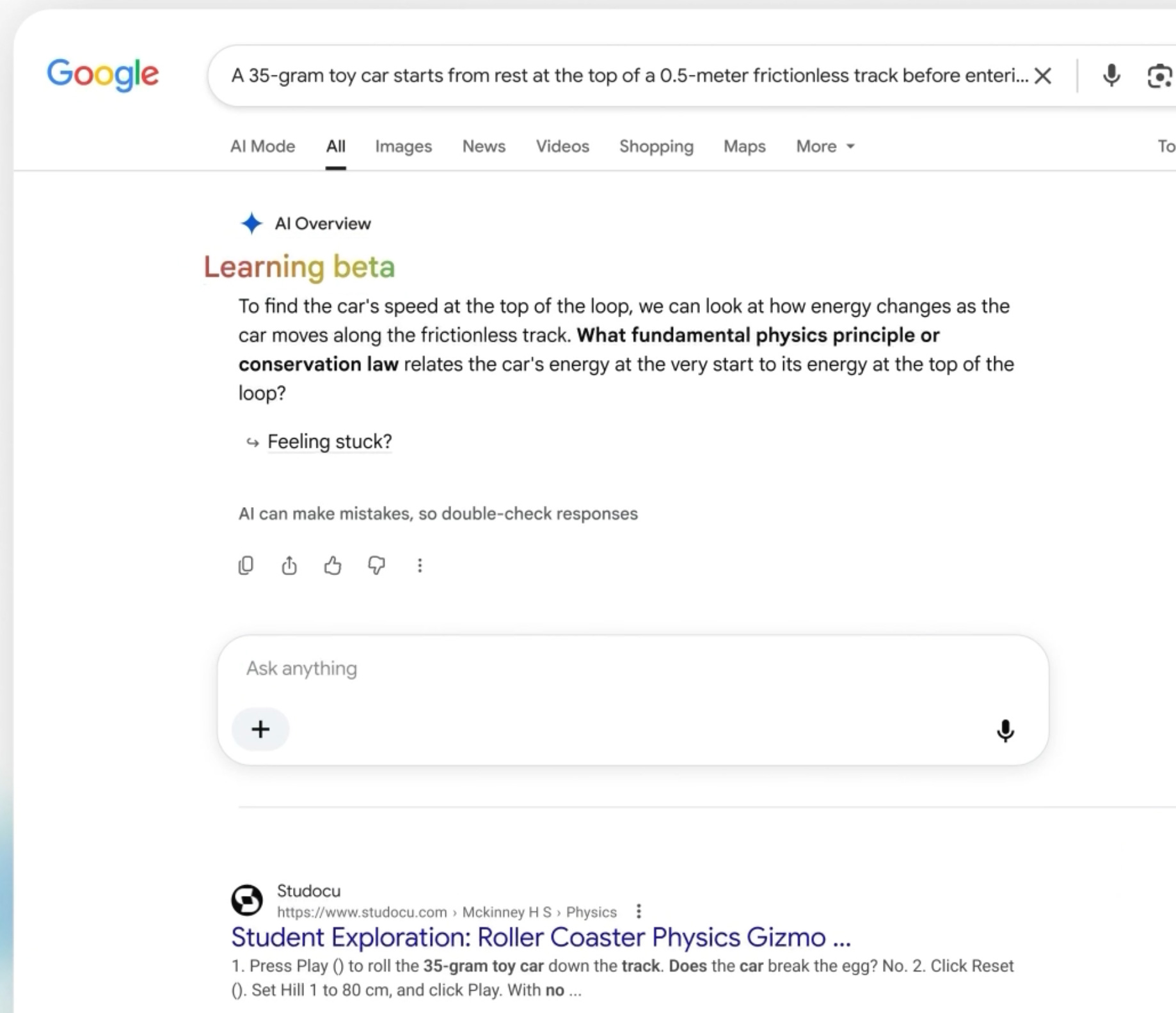
Google has announced a major shift in how artificial intelligence tools and search functions are managed for K-12 student accounts. Under the updated approach, services including Gemini, Gemini Notebook, Gemini in Classroom, and Google Search will be turned off by default for student accounts, requiring school administrators to explicitly opt in before students can access them.
According to the company, the adjustment was made in response to direct feedback from educators, school districts, researchers, and policymakers aiming for greater oversight regarding classroom technology. Google stated that its primary objective is to give educational leaders the necessary controls to manage artificial intelligence integration according to their individual policies.
Balancing Control and Integration
The update also coincides with the rollout of guided learning features designed to assist students with homework without providing direct answers. However, the integration of artificial intelligence directly into core search infrastructure has introduced complex operational questions for schools.
Because artificial intelligence features have become deeply embedded within the standard search engine architecture, separating traditional web search from newer automated tools has proven challenging. For educational institutions wishing to restrict automated text generation while retaining basic web research capabilities, this structural overlap presents a difficult choice.
Under Google's proposed changes, expected to begin rolling out in early 2027, schools that do not want students using AI within Search will have to disable Google Search entirely.
Broader Implications for Education and Tech
The announcement has triggered widespread discussion regarding the growing reliance on major technology platforms within educational settings. Many observers have raised concerns about how tightly bundled digital services affect institutional autonomy, noting that schools heavily dependent on established ecosystem tools face mounting pressure to accept new technological paradigms.
As educational districts evaluate these upcoming adjustments, the situation highlights an ongoing tension between technological integration and institutional caution. Stakeholders continue to weigh the benefits of digital assistance against the need for rigorous oversight and independent student skill development.

