The Art of Absence: Phoebe Bridgers, boygenius, and the Power of the Unseen
There’s something profoundly intriguing about what we can’t see. In an era where every moment is documented, filtered, and shared ad nauseam, Phoebe Bridgers has masterfully reclaimed the power of absence. Her recent arena tour, with its strict no-phone policy, has turned her performances into something almost mythical—experiences that exist only in the memories of those who were there. Personally, I think this is a brilliant move. In a world where authenticity is often sacrificed for virality, Bridgers is reminding us that some things are meant to be felt, not filmed.
What makes this particularly fascinating is how Bridgers balances this intentional obscurity with moments of carefully curated visibility. Take her recent reunion with Julien Baker and Lucy Dacus, her boygenius bandmates, at a Brooklyn show. We know it happened, but we can’t watch it—unless, of course, we turn to her Lance Oppenheim-directed acoustic performance for A24’s Sound Check At Cherry Lane Theatre. This contrast between the unseen and the meticulously presented is, in my opinion, where Bridgers’ genius lies. She’s not just an artist; she’s a curator of experiences, deciding what we get to witness and what remains ours to imagine.
The Cherry Lane Session: A Study in Contrast
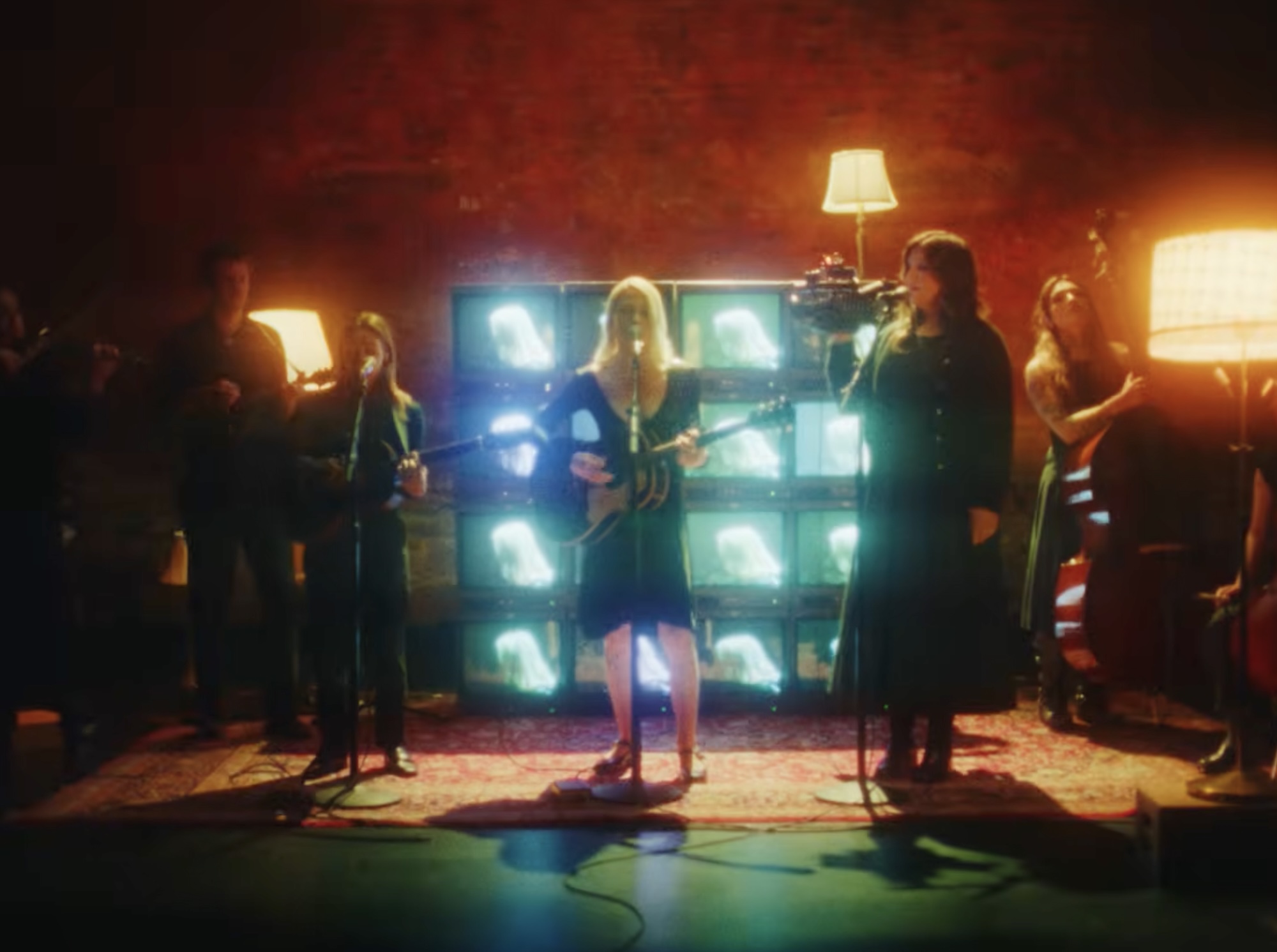
The Cherry Lane performance is a masterclass in visual and auditory storytelling. Oppenheim’s direction, with its hypnotic blue lighting and chaotic film stocks, feels like an extension of Primetime, the unnerving film in which Bridgers made her acting debut. One thing that immediately stands out is how the aesthetic mirrors the themes of her work—a blend of intimacy and unease, beauty and chaos. When she sings “On Video” from the Primetime soundtrack, accompanied only by Ethan Gruska on piano, it’s as if she’s stripping away the layers of performance to reveal something raw and unguarded.
But what this really suggests is that Bridgers understands the weight of context. Her music isn’t just about the notes or the lyrics; it’s about the atmosphere, the visuals, the feeling. When Baker and Dacus join her for acoustic renditions of “Haunted” and “Lost Boys,” their harmonies aren’t just sung—they’re felt. Dacus even films Bridgers with a gigantic video camera, a detail that I find especially interesting. It’s as if she’s saying, “I’ll control the narrative, but I’ll let you see just enough.”
The Broader Implications: Art in the Age of Over-Documentation
If you take a step back and think about it, Bridgers’ approach raises a deeper question: What happens to art when it’s constantly consumed through a screen? Her no-phone policy isn’t just a gimmick; it’s a statement about presence. In a culture where we’re often more focused on capturing the moment than living it, she’s forcing us to be fully there. This isn’t just about her music—it’s about reclaiming the human experience.
What many people don’t realize is that this strategy also amplifies the impact of the moments she does choose to share. The Cherry Lane session isn’t just another live video; it’s an art piece, a carefully crafted 12-minute escape. It’s less about documentation and more about immersion. In a world where everything is disposable, Bridgers is creating something that feels intentional, even sacred.
The Future of boygenius and Beyond
The boygenius reunion, though brief, is a reminder of the magic that happens when these three artists come together. Their harmonies are, as always, astonishing—but what’s more intriguing is the way they complement Bridgers’ solo work. Lost Weekend, her latest album, feels like a natural evolution of the themes they explored as a trio: loss, longing, and the search for connection. From my perspective, boygenius isn’t just a side project; it’s a cornerstone of Bridgers’ artistic identity.
This raises a deeper question: Will we see more from boygenius in the future? Personally, I think it’s inevitable. Their chemistry is too powerful to ignore, and their individual careers only seem to be gaining momentum. But what’s truly exciting is how they’ll continue to push boundaries—both as a group and as solo artists.
Final Thoughts: The Beauty of the Unseen
As I reflect on Bridgers’ work, I’m struck by how much she’s achieved by not showing us everything. Her music, her performances, her collaborations—they all feel like pieces of a larger puzzle, one that we’re invited to assemble in our own minds. In an age where everything is laid bare, she’s a reminder that mystery can be a form of art.
What this really suggests is that the most powerful experiences are often the ones we can’t fully capture. Whether it’s a phone-free arena show or a meticulously directed acoustic session, Bridgers is teaching us to appreciate the moment—not just the memory of it. And in doing so, she’s redefining what it means to be an artist in the digital age.
So, the next time you find yourself reaching for your phone to record something, maybe take a cue from Phoebe Bridgers. Put it down. Let the moment wash over you. Because sometimes, the best things in life are the ones you can’t share.
Lost Weekend is out now on Dead Oceans. But more importantly, the experience of Bridgers’ art? That’s something you’ll have to seek out for yourself.